
2025 Rolex Monterey Motorsports Reunion:
Daily Featured Race Groups
Report & Photos by Ben Kuhl
Every August, WeatherTech Raceway Laguna Seca welcomes race fans of all vintages to celebrate. Whatever your favorite flavor of racing may be, The Reunion will have something for you. The Rolex Monterey Motorsports Reunion is where history roars, where engineering meets memory and where legends are truly driven — and displayed. The following are the featured run groups for 2025, each one a star in motion.
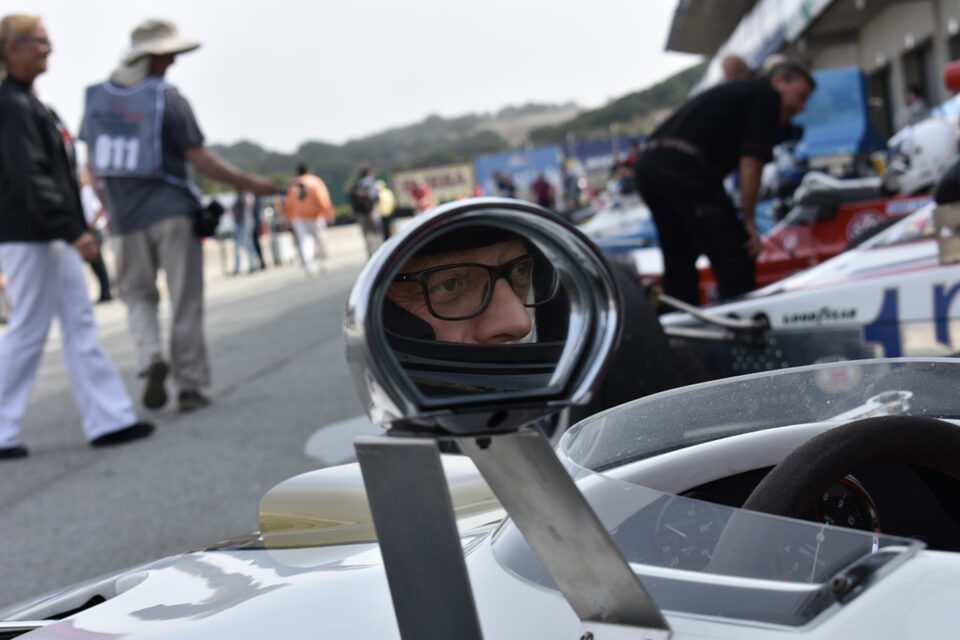
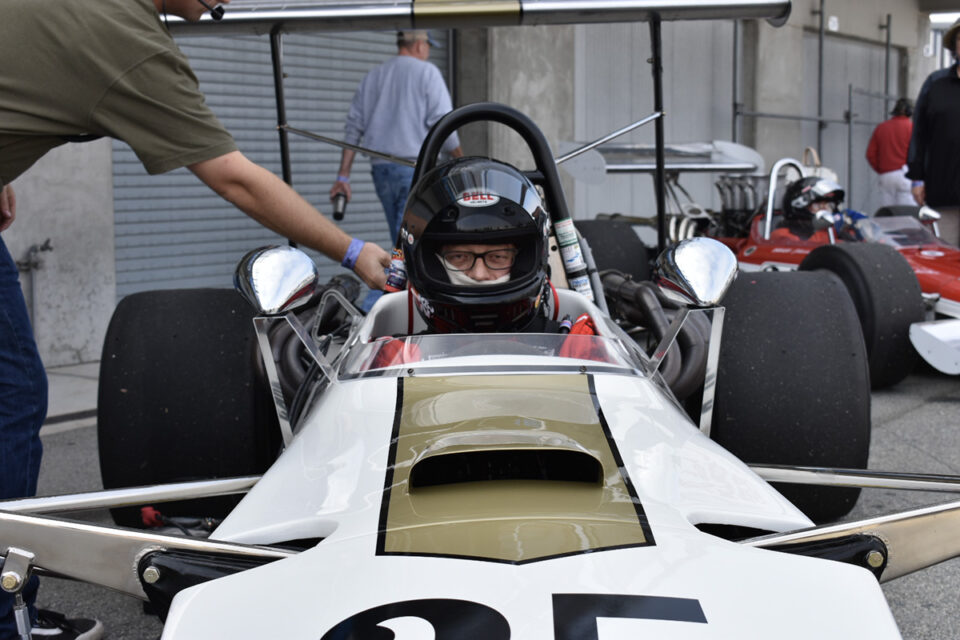
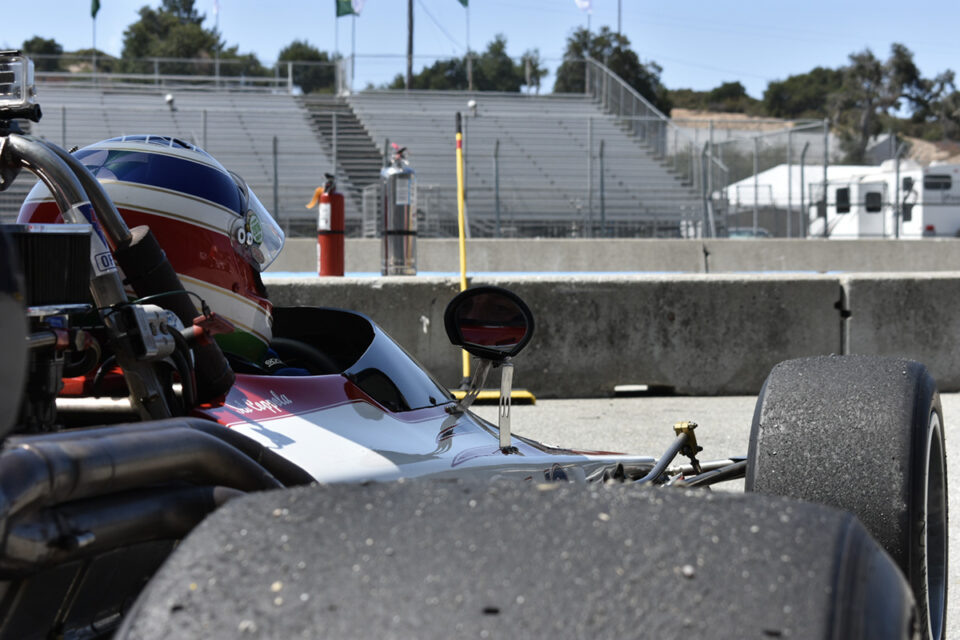
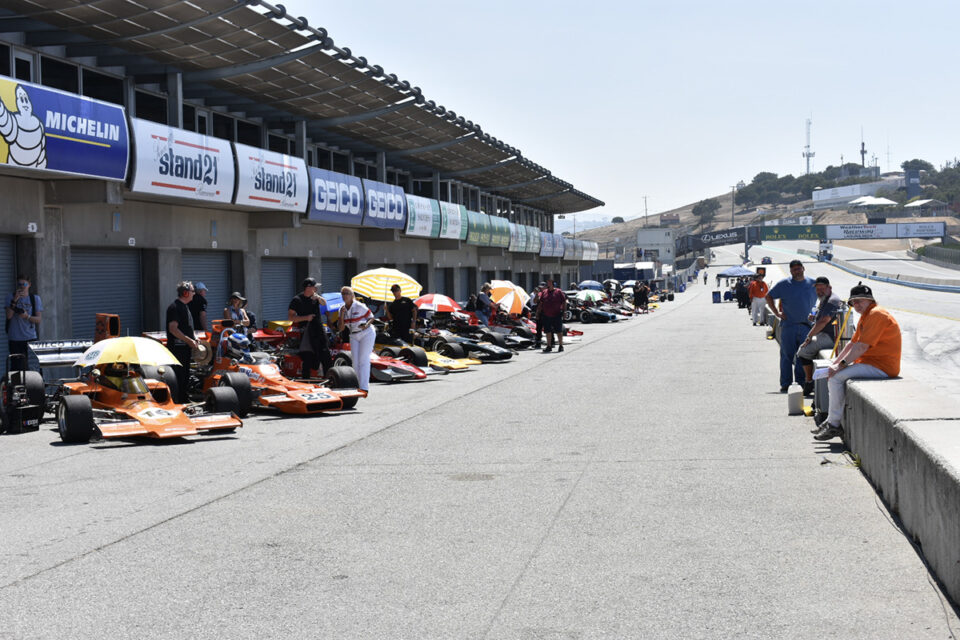
Juan Manuel Fangio Cup – Grand Prix Cars (1922–1955)
A salute to the originators. These machines are long-limbed, pre-war gladiators and early postwar projectiles, marking the transition from cigar-bodied crafts to the svelte forms of the mid-century. Every start is a symphony of open pipes, and every corner feels like a sketch in speed.
Featured Car: 1954 Lancia D50A. Being driven by Charles Nearburg, an innovative Grand Prix contender designed by Vittorio Jano, the Lancia D50A was notable for its stressed-member engine and side-mounted fuel tanks that improved weight distribution. Although plagued by reliability issues, it was raced with distinction by legends like Alberto Ascari and Juan Manuel Fangio against Bugatti’s Mercedes and Maserati’s.
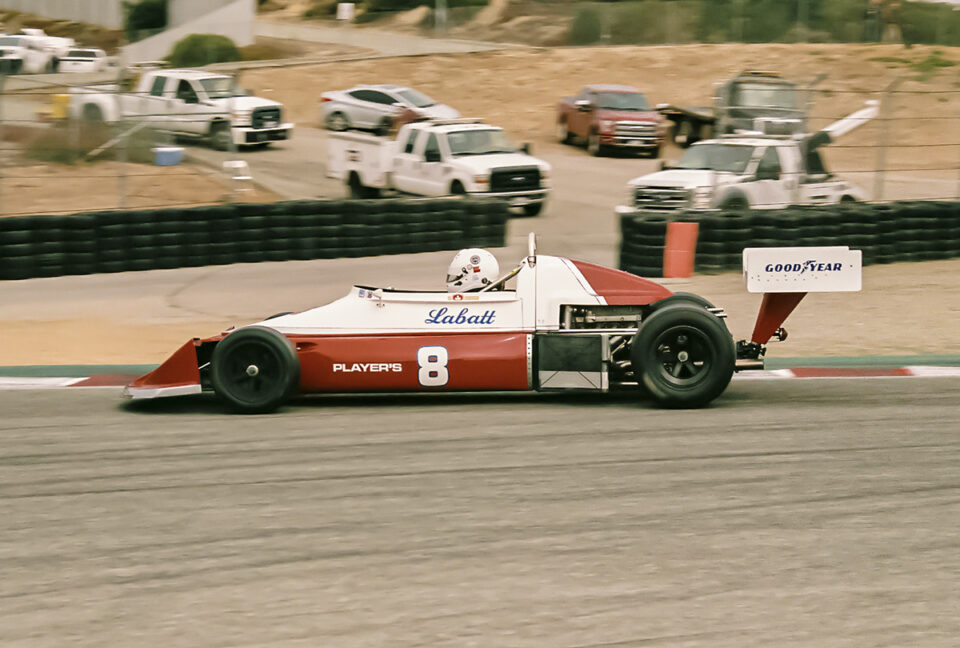
Mario Andretti Trophy – Formula 1 (1966–1985)
This is the golden spine of F1, spanning the dangerous late ’60s, the Cosworth thunder of the ’70s, and into the turbocharged excess of the early ’80s. Every car here was once aimed at immortality on tracks like Monaco and Monza. They carry the weight of champions—and the dreams of drivers and designers alike who created the stories still told today at every Grand Prix race.
Featured Car: 1979 Shadow DN9B, originally driven Elio de Angelis. Known as a dark horse even in its day, this sleek black rocket sports can be identified by the very 70s roaring lion that adds a striking image to an already impressive car. The boldness of the Shadow-designed cars still resonates today.
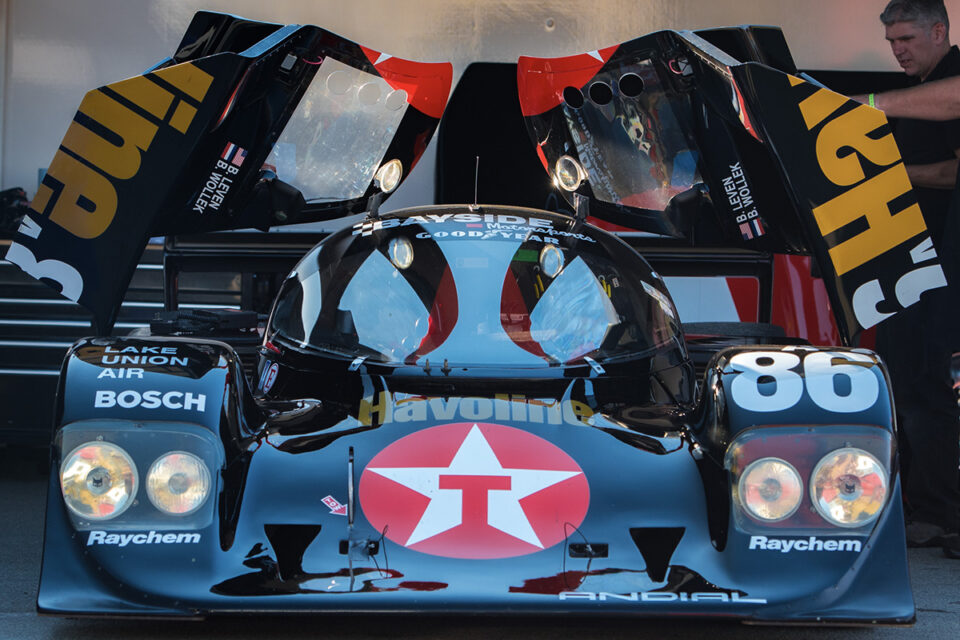
Scott Pruett Legends of Endurance – Sports Cars (1991–2011)
A field of howling prototypes and snarling GT machines from the high-aero era of endurance. These are the last analog warriors before modern hybrid silence. Think Sebring at night, headlights cutting through brake dust, and names like Audi, Corvette and Panoz.
Featured Car: 1997 Panoz GTR. The Panoz GTR was an American-built GT1-class beast known for its unique front-engine layout—unusual in a field dominated by mid-engine machines. With a robust V8 powerplant and a chassis designed for endurance racing, it combined raw power with reliability.
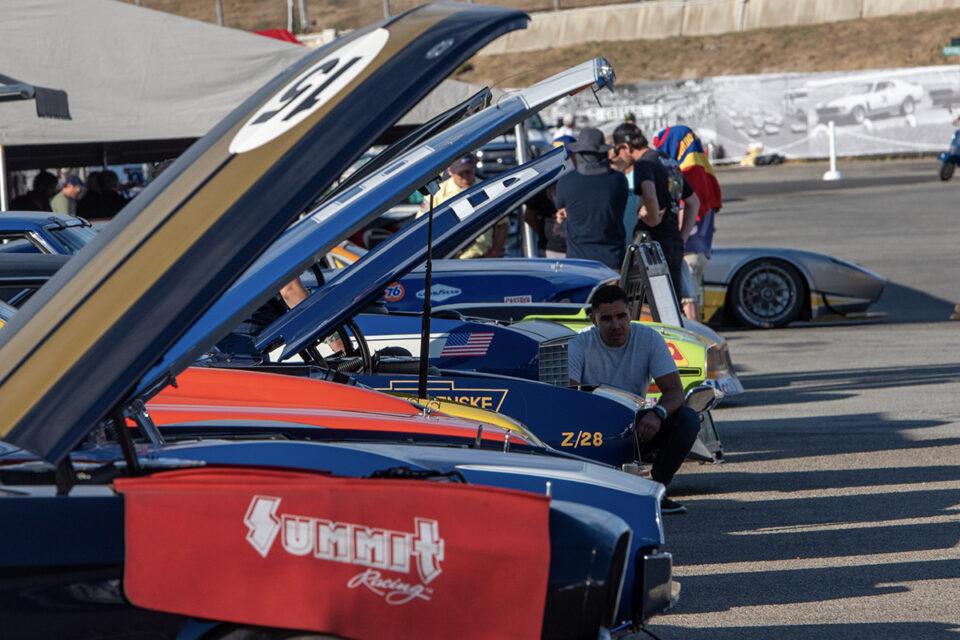
Parnelli Jones Trophy: Trans-Am (1966–1972)
The “pony car” wars, alive and uncaged. Fire-breathing Mustangs, Camaros, Javelins and ’Cudas duel in a V8 thunderstorm, carrying liveries once backed by Detroit’s biggest marques. Road courses have rarely sounded so American.
Featured Car: 1970 Plymouth Barracuda, Dan Gurney AAR spec. Wearing its factory blue and nose cone like a badge of defiance, this car sat dormant for decades before a SoCal restorer brought it back, one panel at a time to be driven now by Bill Ockerlund.
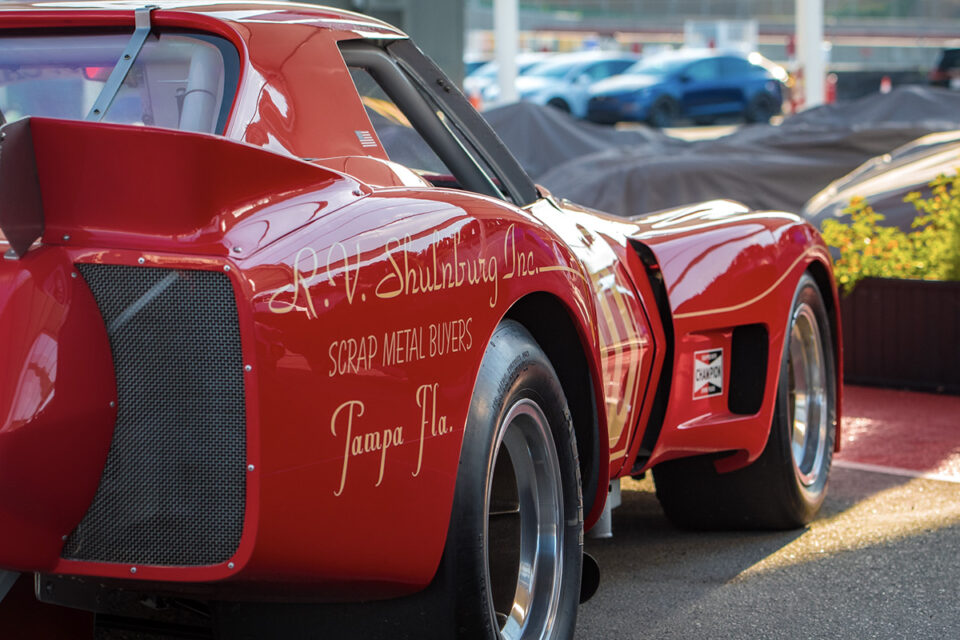
Ken Miles Sixties GT Trophy: GT & Production Cars (1955–1967)
A gentleman’s grid with grit under the fingernails. Shelby Cobras, Ferrari 275 GTBs, and Jaguar E-Types drift through the turns in proper fashion—tails-out, engines redlined and roaring with dual exhausts. This is a personal favorite, as it means a guaranteed large field of beautiful looking and intoxicating sounds from flag to flag.
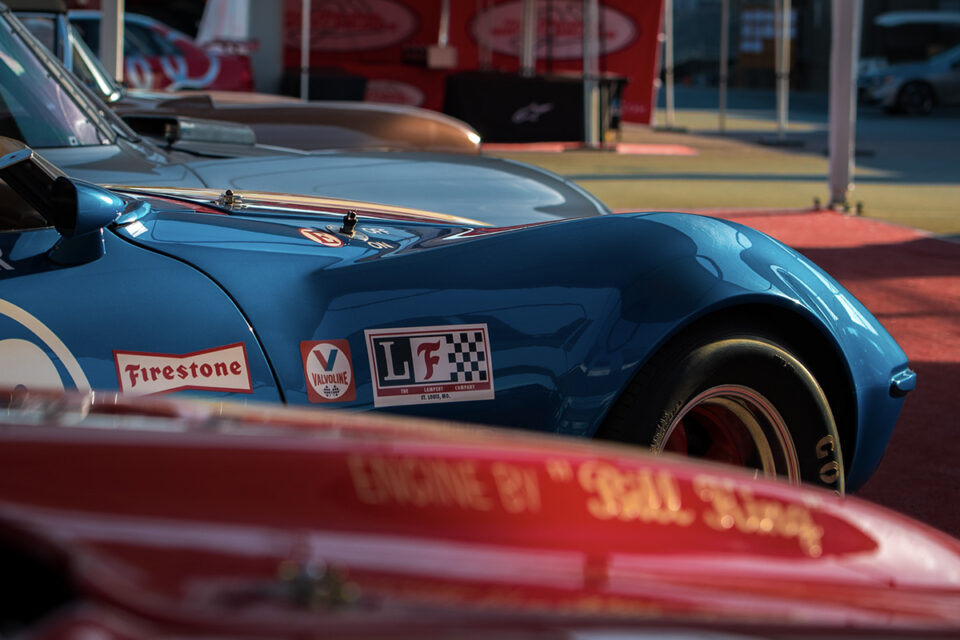
Featured Car: The ’64 Corvette was a refined version of the revolutionary Sting Ray, blending American muscle with sportscar handling. Under the hood, small-block V8s offered serious grunt, while independent rear suspension—introduced just a year prior—gave it the agility to match. In SCCA and FIA GT racing it was a force in B-Production and GT classes, often driven by privateers and car-dealer-backed teams.
Hurley Haywood Trophy: IMSA GTP / GTO / Group C (1981–1991)
Tech-rich machines that blurred the lines between prototype and production-based racers. Turbocharged, high-downforce and massively fast—these were the dinosaurs nearing extinction just as digital timing was born.
Featured Car: 1988 Chevrolet Camaro, campaigned by Mike Gagen. In period Porterfield livery, it’s loud, aggressive and authentic to its SCCA roots. Gagen remains hands-on, tuning the car himself and sharing stories from Riverside Raceway to Laguna Seca, keeping the spirit of American road racing alive as a true steward of the sport.
Peter Gregg Trophy: FIA / IMSA GT Cars (1973–1981)
The breed of metal that told factories where it hurt: Detroit-threatening GT cars from Porsche, Ferrari, BMW and Nissan slugging it out in endurance fights. Think long headlights, leather seats removed and race numbers so big they could wear their own trophy.
Featured Car: 1976 Dekon Monza – Built by Horst Kwech and Lee Dykstra, the Dekon Monza was Chevrolet’s answer to the Porsche domination in IMSA GT racing. With a tube-frame chassis, wide fenders and a snarling small-block V8, it was brutal, loud, and fast. Backed by Chevrolet and campaigned by racers like Al Holbert and Michael Keyser, the Monza became a giant killer in the GT ranks.
Jim Hall Cup: USRRC Sports Racing Cars (1963–1968)
A school of pioneers from the United States Road Racing Championship era; a sharp turn from elegant GT into brutal specials like Chaparral and Lola. Known for innovation: movable wings, automatic stays and bold engineering.
Featured Car: 1969 Elden Mk7 Sturgis. Originally developed by Elden Racing Cars in the UK, the Mk7 Sports Racer was a lightweight, low-slung machine built for club-level sports car racing. With cycle fenders, a mid-mounted engine and minimalist bodywork, it epitomized the “giant killer” spirit of British club racing. The Sturgiss car is a rare survivor—one of very few Mk7 sports racers built—and it maintains a unique footprint in vintage paddocks.
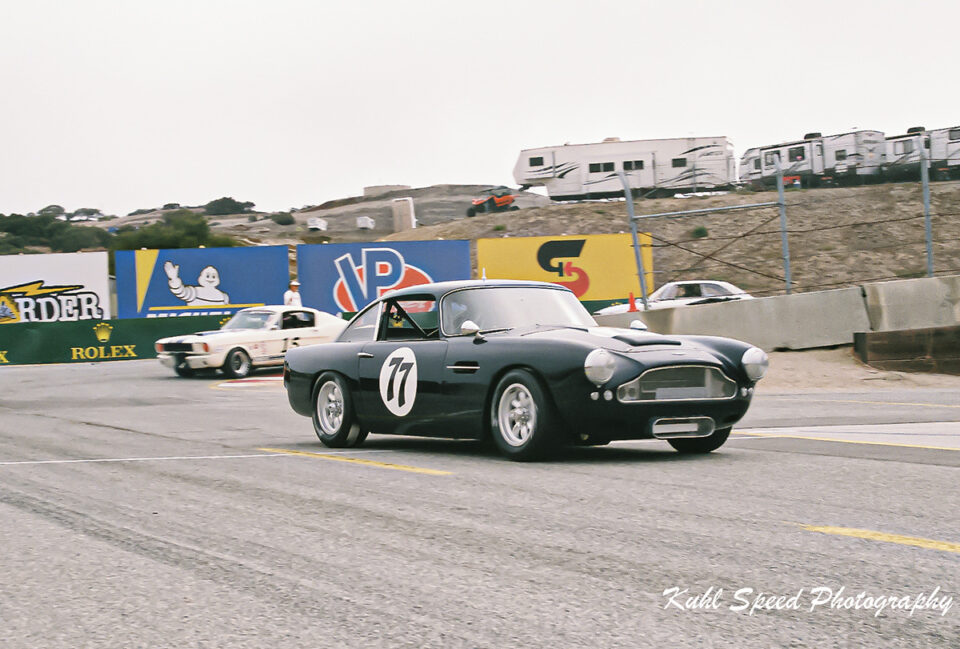
Dan Gurney Trophy: Saloon Cars (1955–1972)
Stock-bodied racers racing hard—where sedans and coupes meant business. These cars were home-track heroes turned international competitors, often packed with class equity and racing underdog pride.
Featured Car: 1965 Austin Mini Cooper S. Driven in-period by local Californian Herbert Heidt, now restored with original Nuffield-era wheels and rally heritage—still small in stature, big in bite.
John Morton Trophy: Small Displacement Production Cars (1950s–1960s)
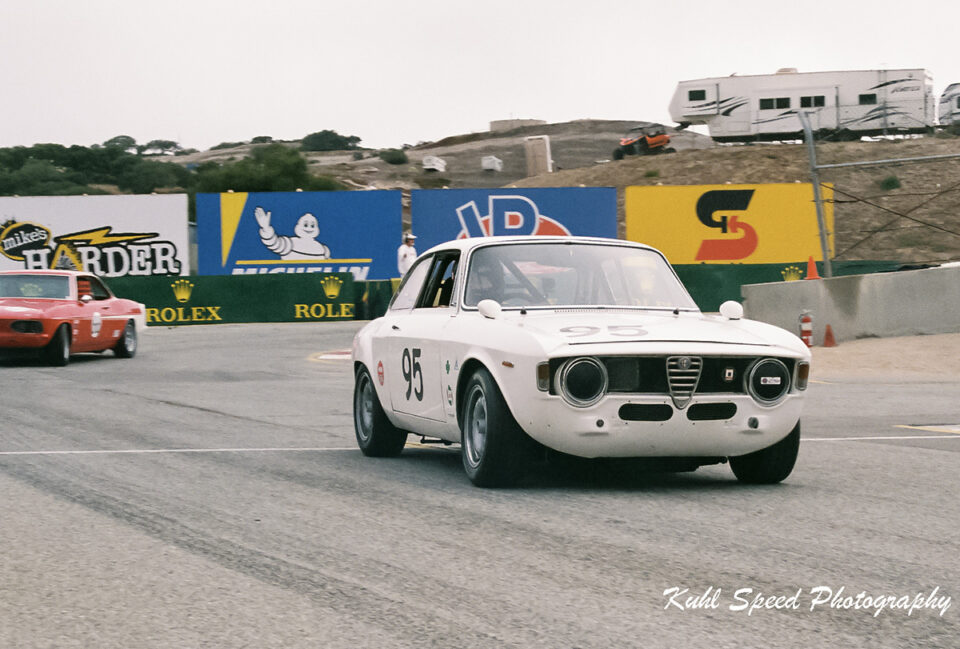
European machinery with soup‑cooling headers: Alfa Romeos, MGs, early Ferraris, Triumphs—lightweight and nimble. This group is about finesse over force, handling over horsepower.
Featured Car: 1958 Porsche 550 Spyder. Noted in race results and awarded the Rolex Group award, this car belongs to Francisco Guzman. Its aluminum body still echoes the whine of its racer-mechanics and chassis number worn with the pride of originally.
Briggs S. Cunningham Trophy: Front‑Engine Sports Racers & American Specials (1947–1960)
The raw American take on European elegance: burly V8s, drum brakes and rear-hinged hoods on chassis’ built from backyard shops to upscale U.S. manufacturers. These were racing’s rebels.
Featured Car: 1959 Sadler-Meyer Special. Driven to victory in this very event by Nick Price in 2024, it remains faithful to its bone-stock lines, with Buick-derived power and foolproof simplicity.
Pedro Rodriguez Trophy: FIA Manufacturers’ Championship (1961–1975)
Endurance GT machines nominated by their factories for world titles: Ford GT40s, Chevy Corvettes, Chevron prototypes. These cars defined the era of constructor glory—and mechanical heartbreak.
Featured Car: 1969 Chevron B16. Piloted by Ethan Shippert in recent Reunion races, it wears Gray Gregory’s markings and bridges LMP styling with GT sensibilities, all wrapped in symmetry and speed.
Ragtime Racers Exhibition
Less about classification, more about pageantry: ragtime-era inspired racing interpretations, tribute liveries and playful machines that echo the jitters of the early track days.
Featured Story: Rick Rawlins races a 1920 Ford board-track replica—complete with wooden fenders and stripped-down bodywork—earning cheers and nods as he rips around the Corkscrew.
Formula Fun with Formula 1
The Mario Andretti Trophy isn’t just a race—it’s an opera of intent. These cars were lightning rods of innovation: six-wheel Tyrrells, flat-12 Ferraris, turbocharged Brabhams. Some carry the scars of tragedy; others were driven by champions who lived to become legends. Expect to see a Lotus 79 with its ground-effects skirts intact, a Ferrari 312T4 with Niki Lauda’s setup notes still in the dash, and even a Ligier JS11 whose blue livery still whispers “Vive la France.”
Each is a singular star in a constellation of speed, united only by sheer nerve and the men who once danced them through SPA’s Eau Rouge.
IROC (Unser Family Cup, 1973–2006)
This year marks a first: all seven generations of the iconic IROC series take the stage. Originally built to prove which driver—not which car—was best, IROC stripped away excuses. Equal cars, different talents. You’ll see Porsches that once slid sideways under Foyt, Firebirds that traded paint with Earnhardt and even Dodge Avengers that carried NASCAR royalty into the mid-’90s.
The cars are joined by the men who made them famous: Jeff Gordon, Al Unser Jr., Ricky Rudd and more. Al Jr. serves as grand marshal, a fitting tribute to his family’s massive legacy throughout IndyCars, Stock Cars, IROC glory and Pike’s Peak legend. This isn’t just a demonstration—it’s a resurrection.
Featured Car: 1974 Porsche Carrera RSR IROC, originally campaigned in the first IROC season. It wears its #7 livery proudly, still breathing fire through its open exhaust and marking the dawn of something wild.
